MMowMentorUK Guide

The navigation guide · US edition

Best wire-free robot lawn mowers

Every mower on this page has done away with the boundary wire — but they have not all done it the same way. Some listen to satellites, some map your garden with lasers, and some simply look where they are going. The right choice depends less on the badge than on your garden: its shade, its slopes and how much sky it can see.

Striped shadows falling across a green lawn (stock photo)
Orderly stripes are the wire-free party trick: a mower that knows where it is can mow in lines, not at random. (Stock photo.)

Three ways to ditch the wire

Satellite (RTK)

A small reference station in your garden corrects satellite signals to centimetre accuracy. Precise, orderly mowing in stripes, and the most proven approach. The catch is in the name: it needs sky. Tall trees, high walls and narrow side passages can all thin the signal.

Navimow i Series · Mammotion LUBA 2 · Husqvarna NERA

LiDAR

The mower sweeps the garden with laser light and builds its own map, the way a robot vacuum maps a room. It works in the dark, under trees and between buildings, because it is not waiting on a signal from space. The newer of the three ideas, and the one to watch.

Hookii Neomow X · Ecovacs GOAT (newer models)

Camera & AI

A camera watches the ground ahead and a trained network tells lawn from path, leaf from lawn ornament. Nothing to install anywhere in the garden — the intelligence is all on board. Very heavy shade is no problem; very low light and long, wet grass can be.

Worx Landroid Vision

The wire-free field, side by side

Typical price bands, published slope classes and coverage figures — gathered from the manufacturers, not from a test track of our own.

MowerHow it navigatesSlopesCovers up toCutting widthTypical priceWhere to check the price
Navimow i Series (i105N / i110N)SegwaySatellite (RTK) positioning with a camera to help it seeGentle to moderate — around 30% at mostUp to ¼ acre (i110N)7 in (18 cm) disc$999–$1,299Check price
Neomow XHookii3D LiDAR and cameras — it maps with lasers, not satellitesSteep banks — around 45% on the manufacturer's figuresUp to about 1 acre (4,000 m²)11 in (28 cm) single disc$1,999–$2,799Check price
Landroid VisionWorxCamera and on-board AI — no wire, no satellite stationModerate — around 30%Up to about 1 acre, depending on model7–9 in, depending on model$999–$1,499Check price
LUBA 2 AWDMammotionSatellite (RTK) positioning plus cameras, with all-wheel driveUp to 80% — the strongest climber here by a distanceUp to 1.25–2.5 acres, depending on version16 in (40 cm) twin discs$2,599–$4,499Check price
GOAT range (incl. A3000 LiDAR)EcovacsLiDAR and camera navigation on the newer modelsUp to around 45% on the current models — check the small print before buying for a bankUp to about ¾ acre on the larger modelsMid-size disc class$1,299–$1,699Check price

The mowers in detail

Segway Navimow i Series robot lawn mower — the manufacturer's own product image

Best for most small yards

Navimow i Series (i105N / i110N)

Segway · typical price $999–$1,299

Check price

The sensible starting point for a small lawn. Segway's satellite positioning does away with the boundary wire, the camera lends a hand near edges and obstacles, and the whole thing is sensibly sized for modest gardens rather than small farms. Like all satellite-guided mowers it is happiest with a decent view of the sky, so a garden hemmed in by tall trees is worth a second thought.

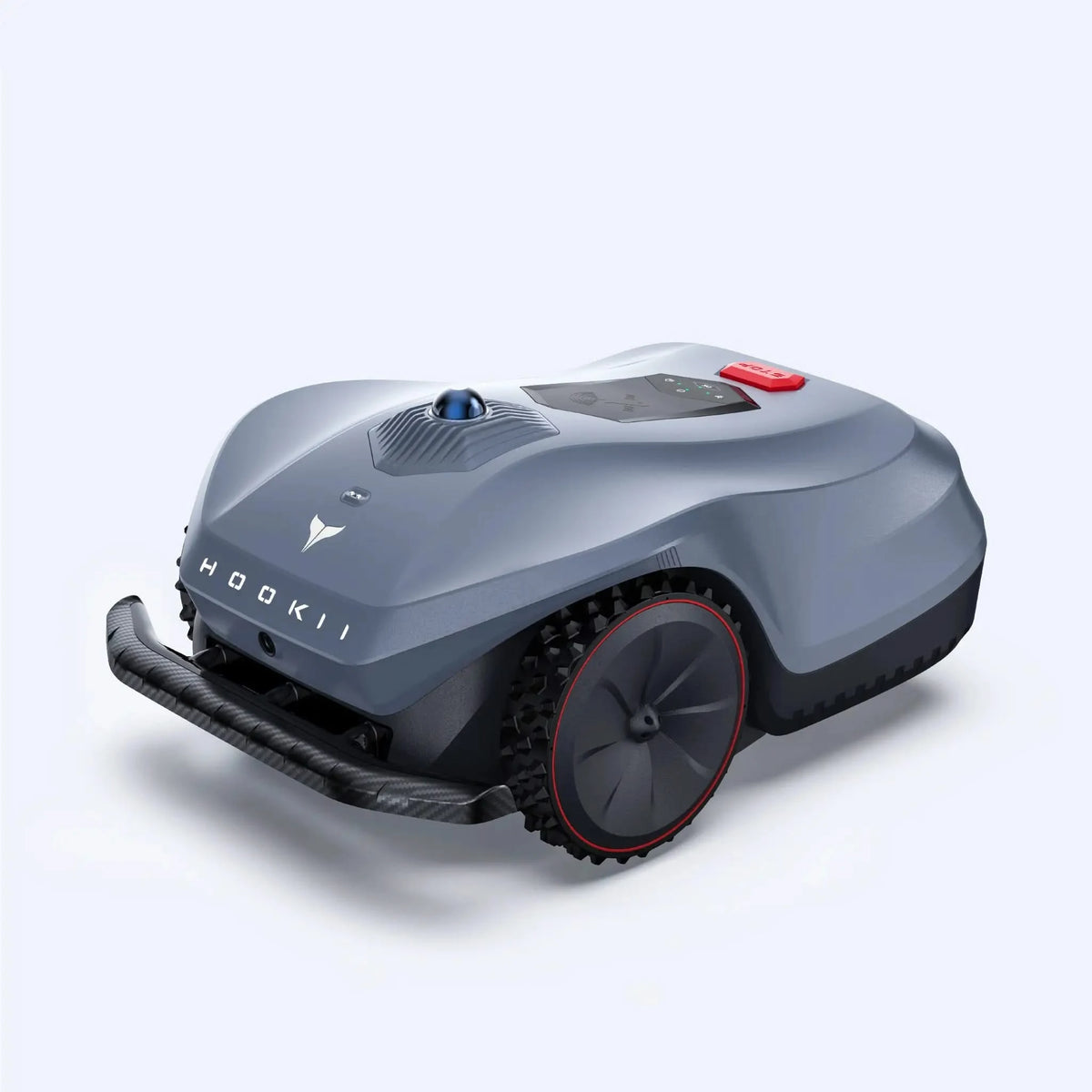
Hookii Neomow X robot lawn mower — the manufacturer's own product image

Best under trees

Neomow X

Hookii · typical price $1,999–$2,799

Check price

The interesting one. Because the Neomow X steers by LiDAR — building a map of your garden with light rather than listening for satellites — it keeps its bearings under trees and beside high walls where satellite-guided rivals can lose the plot, sometimes literally. Hookii is a newer name than the big garden brands, so long-term parts and support are the open question, but the navigation idea is sound and rather clever.

Worx Landroid Vision robot lawn mower — the manufacturer's own product image

Easiest to live with

Landroid Vision

Worx · typical price $999–$1,499

Check price

The Vision simply looks where it is going. A camera and a trained neural network tell grass from path, leaf and lurking hedgehog — do check the current wildlife guidance, as with any mower — and there is no reference station to site and no wire to bury. Vision systems can be flummoxed by very low light and long wet grass, but for a shaded garden where satellites struggle, this is the fuss-free route in.

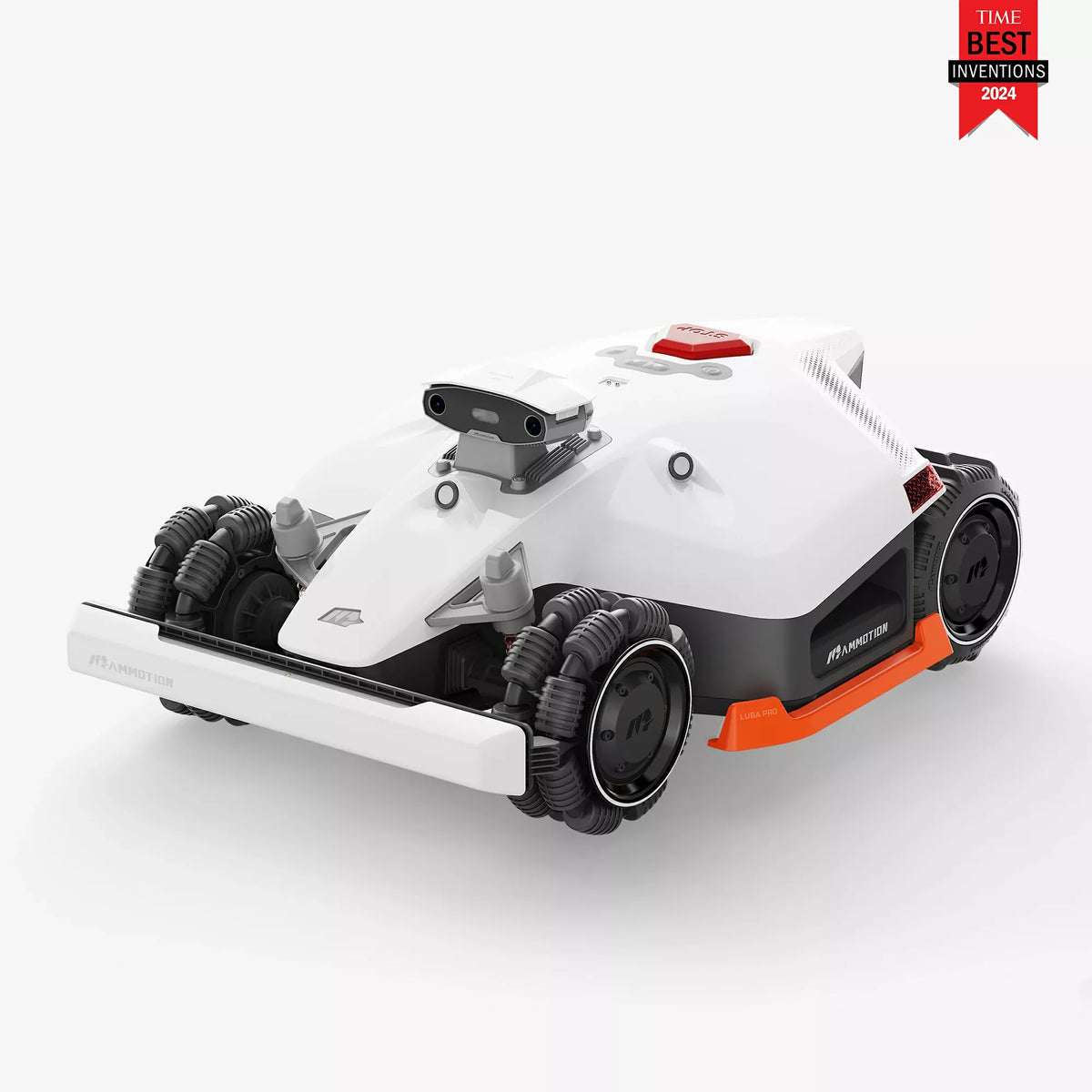
Mammotion LUBA 2 AWD robot lawn mower — the manufacturer's own product image

Best for slopes

LUBA 2 AWD

Mammotion · typical price $2,599–$4,499

Check price

Less a lawn ornament, more a small tractor. Four driven wheels and a manufacturer slope rating of 80% mean it takes banks in its stride that would leave most mowers sitting at the bottom looking sorry for themselves. The twin cutting discs cover ground quickly, too. It is a lot of money and rather a lot of machine for a pocket-handkerchief lawn — but on a sloping, uneven plot there is nothing else quite like it.

Ecovacs GOAT robot lawn mower — the manufacturer's own product image

One to research carefully

GOAT range (incl. A3000 LiDAR)

Ecovacs · typical price $1,299–$1,699

Check price

Ecovacs made its name with robot vacuum cleaners and has brought the same map-everything approach outdoors. The GOAT range has changed navigation technology between generations, so the one piece of homework that matters is checking exactly which system the model in front of you uses. Do that, and the specs are competitive across the board.

Models listed across 6 manufacturers in our research notes; the table above shows the ones on general sale in the US.

Questions we are asked

Is wire-free as reliable as a boundary wire?

A wire is dumb and dependable: the mower always knows where the edge is. Wire-free systems trade that simplicity for freedom from cables, and the best of them are now genuinely good — but the honest answer is that it depends on the garden. Open and sunny suits satellite; enclosed and shady suits LiDAR or camera. Match the system to the plot and reliability follows.

Can a wire-free mower manage two separate lawns?

Generally yes — most let you map a second zone, carrying the mower across the path or driveway between them, and some will cross a firm path on their own. It is one of the quiet pleasures of the technology: with a wire, a second lawn used to mean a second installation.

What happens when the technology changes in three years?

A fair worry with any connected gadget. The mower will keep mowing even if the app fades — the maps live on the machine — but look for makers with a track record of supporting older models, and keep the manual. A printed manual, in a drawer, has outlived many an app.