
Best for most small yards
Navimow i Series (i105N / i110N)
Segway
- Finds its way by
- Satellite (RTK) positioning with a camera to help it see
- Typical price
- $999–$1,299
Small, fairly open gardens up to about a quarter of an acre.
Check priceThe flagship guide · US edition
A small yard asks more of a robot mower than a big one, not less. The turns are tighter, the edges matter more, and there is usually a tree, a fence or a house wall standing between the mower and the sky. These are the five wire-free models whose specifications suit small plots best — compared from the manufacturers' own data, with the awkward bits pointed out rather than glossed over.
A note on method: we have not tested these machines on a lawn of our own. Every figure here comes from published specifications and manuals, cross-checked between sources. Our methodology, in full.
Answer six quick questions about your yard — its size, slopes and shady corners — and the Mower Finder will match it to the model that fits best, with the reasoning shown.
Best for most small yards
Segway
Small, fairly open gardens up to about a quarter of an acre.
Check price
Easiest to live with
Worx
Shady gardens and anyone who wants the least possible setting up.
Check price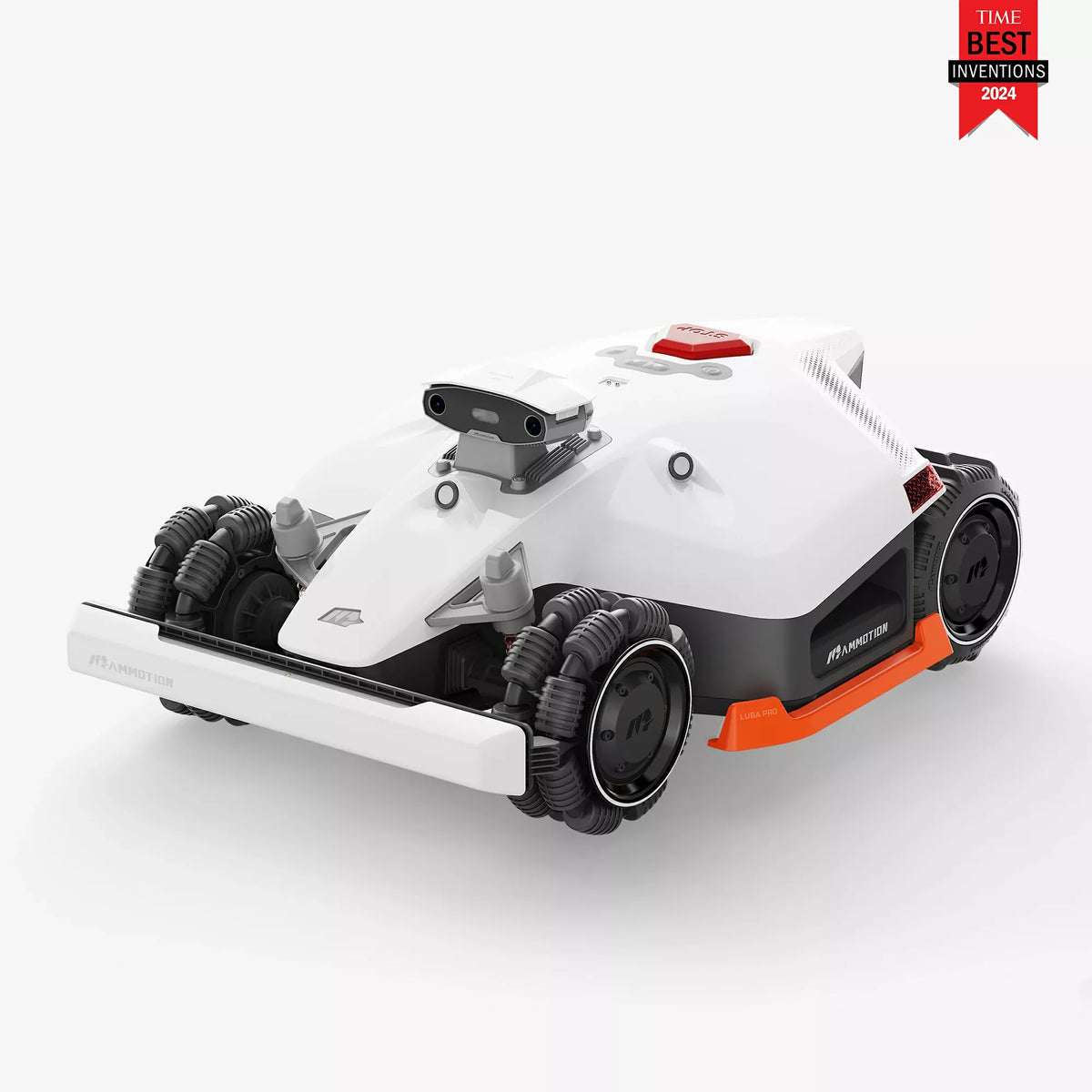
Best for slopes
Mammotion
Slopes, bumps and bigger or rougher ground.
Check pricePrices are typical price bands — what these models commonly sell for, not a live quote. They drift with the seasons and the sales, so treat the band as a guide and the button as the answer.
| Mower | How it navigates | Slopes | Covers up to | Cutting width | Typical price | Where to check the price |
|---|---|---|---|---|---|---|
| Navimow i Series (i105N / i110N)Segway | Satellite (RTK) positioning with a camera to help it see | Gentle to moderate — around 30% at most | Up to ¼ acre (i110N) | 7 in (18 cm) disc | $999–$1,299 | Check price |
| Landroid VisionWorx | Camera and on-board AI — no wire, no satellite station | Moderate — around 30% | Up to about 1 acre, depending on model | 7–9 in, depending on model | $999–$1,499 | Check price |
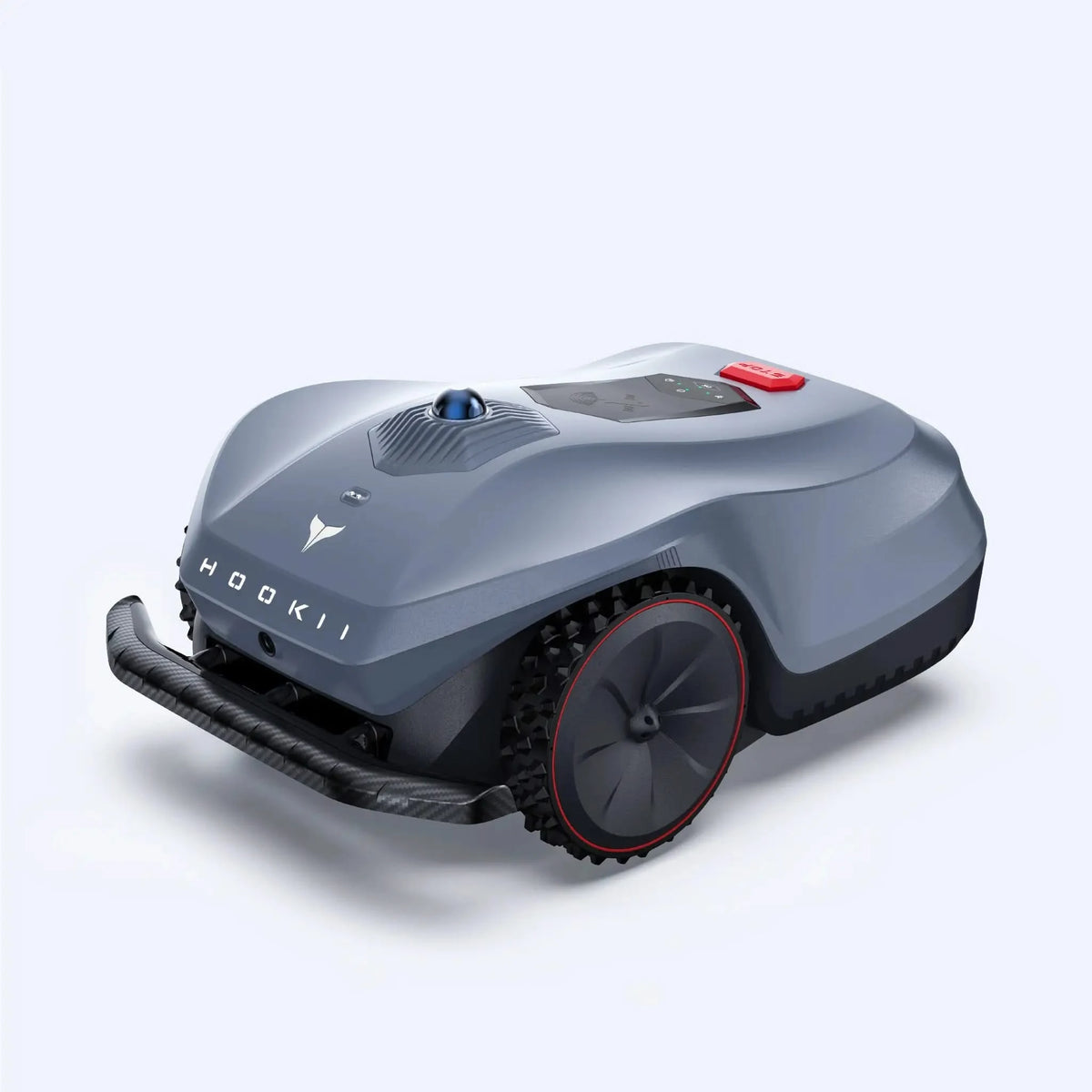 Neomow XHookii | 3D LiDAR and cameras — it maps with lasers, not satellites | Steep banks — around 45% on the manufacturer's figures | Up to about 1 acre (4,000 m²) | 11 in (28 cm) single disc | $1,999–$2,799 | Check price |
| LUBA 2 AWDMammotion | Satellite (RTK) positioning plus cameras, with all-wheel drive | Up to 80% — the strongest climber here by a distance | Up to 1.25–2.5 acres, depending on version | 16 in (40 cm) twin discs | $2,599–$4,499 | Check price |
 GOAT range (incl. A3000 LiDAR)Ecovacs | LiDAR and camera navigation on the newer models | Up to around 45% on the current models — check the small print before buying for a bank | Up to about ¾ acre on the larger models | Mid-size disc class | $1,299–$1,699 | Check price |
Best for most small yards
Segway · covers up to ¼ acre (i110n) · typical price $999–$1,299
The sensible starting point for a small lawn. Segway's satellite positioning does away with the boundary wire, the camera lends a hand near edges and obstacles, and the whole thing is sensibly sized for modest gardens rather than small farms. Like all satellite-guided mowers it is happiest with a decent view of the sky, so a garden hemmed in by tall trees is worth a second thought.
Best for: Small, fairly open gardens up to about a quarter of an acre. Slopes: Gentle to moderate — around 30% at most.
Easiest to live with
Worx · covers up to about 1 acre, depending on model · typical price $999–$1,499
The Vision simply looks where it is going. A camera and a trained neural network tell grass from path, leaf and lurking hedgehog — do check the current wildlife guidance, as with any mower — and there is no reference station to site and no wire to bury. Vision systems can be flummoxed by very low light and long wet grass, but for a shaded garden where satellites struggle, this is the fuss-free route in.
Best for: Shady gardens and anyone who wants the least possible setting up. Slopes: Moderate — around 30%.
Best under trees
Hookii · covers up to about 1 acre (4,000 m²) · typical price $1,999–$2,799
The interesting one. Because the Neomow X steers by LiDAR — building a map of your garden with light rather than listening for satellites — it keeps its bearings under trees and beside high walls where satellite-guided rivals can lose the plot, sometimes literally. Hookii is a newer name than the big garden brands, so long-term parts and support are the open question, but the navigation idea is sound and rather clever.
Best for: Gardens where satellite signals are patchy — shade, trees, tall fences. Slopes: Steep banks — around 45% on the manufacturer's figures.
Best for slopes
Mammotion · covers up to 1.25–2.5 acres, depending on version · typical price $2,599–$4,499
Less a lawn ornament, more a small tractor. Four driven wheels and a manufacturer slope rating of 80% mean it takes banks in its stride that would leave most mowers sitting at the bottom looking sorry for themselves. The twin cutting discs cover ground quickly, too. It is a lot of money and rather a lot of machine for a pocket-handkerchief lawn — but on a sloping, uneven plot there is nothing else quite like it.
Best for: Slopes, bumps and bigger or rougher ground. Slopes: Up to 80% — the strongest climber here by a distance.
One to research carefully
Ecovacs · covers up to about ¾ acre on the larger models · typical price $1,299–$1,699
Ecovacs made its name with robot vacuum cleaners and has brought the same map-everything approach outdoors. The GOAT range has changed navigation technology between generations, so the one piece of homework that matters is checking exactly which system the model in front of you uses. Do that, and the specs are competitive across the board.
Best for: Medium gardens, and households already fond of robot gadgets. Slopes: Up to around 45% on the current models — check the small print before buying for a bank.
Satellite-guided mowers (the Navimow, the LUBA) need a reasonable view of the sky to hold their position. A small yard surrounded by the house, fences and a mature tree is the classic case where a LiDAR model like the Neomow X, or a camera model like the Landroid Vision, is the safer bet.
Manufacturers quote slope ratings as percentages measured their way. Pace the bank out and be truthful with yourself: gentle undulations suit almost anything here, while a proper slope points you firmly toward the all-wheel-drive LUBA 2 and its 80% rating.
Coverage numbers assume ideal conditions. For a small yard this rarely bites — a mower rated for a quarter of an acre will manage a quarter-acre yard — but if your plot sits right at a model's limit, stepping up a size buys easier days and a longer-lived battery.
Blades are cheap and universal-ish; batteries and motherboards are not. Bigger brands carry deeper parts networks, newer brands sometimes keener prices. Neither answer is wrong — but it is worth deciding which risk you prefer before the box arrives.
Yes — small yards are arguably where they shine, because there is no long boundary to wire and the mower is never far from its station. The caveat is navigation: tight, enclosed yards can block satellite signals, which is why two of our five picks steer by LiDAR or camera instead.
Most modern wire-free models manage passages around 2–3 feet wide, and several can be taught a separate zone for the front yard. Check the minimum passage width in the manual for your shortlist — it is printed there, and it is one of the few figures that never gets exaggerated.
Camera and LiDAR models spot and steer round obstacles as a matter of course; satellite-only models rely more on bump sensors. None of them tidies up first, sadly. A two-minute scout of the lawn before a scheduled mow remains the owner's job, as it ever was.